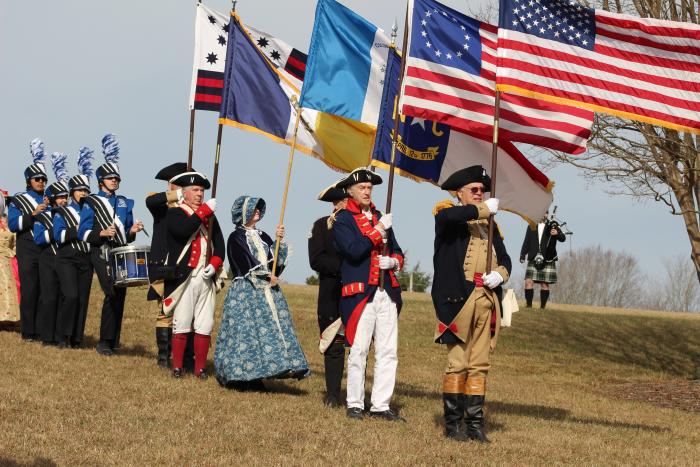
Looking for a fun way to celebrate America’s 250th birthday? Revolutionary Randolph County, nestled in the heart of North Carolina’s Piedmont, is the perfect time-traveling adventure to experience the spirit of ’76.
Here, you can walk in the historic footsteps of local patriots who battled loyalists in the struggle for independence; drive the scenic pottery highway in Seagrove to discover how the pottery arts have shaped 250 years of American history. Immerse yourself in the region's natural wonders, from the ancient Uwharrie Mountains and the mighty Deep River to the North Carolina Zoo-the world’s largest natural habitat zoo, where you can meet red wolves that represent an iconic American comeback story. Through it all, Randolph County welcomes you with authentic small-town charm, a vibrant arts community, and a local culinary scene you’ll fall in love with.
Ready to plan your Revolutionary Randolph Road Trip? Let’s travel through a bit of county history and tour the must-visit sites you’ll huzzah for!

Revolutionary Randolph: Rooted in America 250
Did you know that Randolph County traces its roots directly to the American Revolution? The North Carolina Legislature established Randolph as a new county in 1779. It was named in honor of Virginia’s Peyton Randolph, who served as the first President of the Continental Congress before his sudden death from a stroke in October 1775. Though sometimes considered a "forgotten" founding father, Randolph played an immense role in the early push for independence and liberty, mirroring the brave spirit of the local citizens who stood up for freedom in the Revolutionary War.
Randolph County is in the heart of the Uwharrie Mountains, which geologists consider one of the oldest mountain ranges in the world. While the Uwharries today are gentle, rolling hills and valleys carved by meandering rivers, this ancient terrain—from its rich soil to its distinct bluestone outcropping has sustained human civilization for thousands of years. Long before the first Europeans began settling the land in the 1750s, ancient Native American tribes like the Keyauwee and Saponi thrived here.
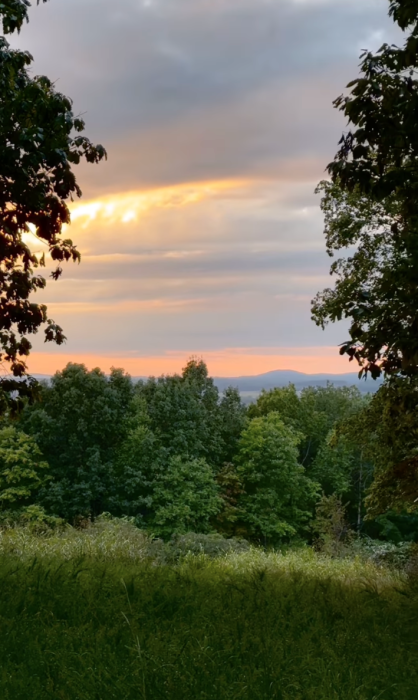
Photo Credit: KateHikesNC
Many of those early European settlers arrived via the Great Wagon Road, a historic thoroughfare pushing south from Philadelphia through Virginia, down into Randolph County, and onward to Charlotte. Developed from ancient Native American trading paths, this road system brought a diverse tapestry of backgrounds into the region, including Scots Irish, Moravians, German immigrants, Quakers, and English settlers.
Each of these groups played vastly different roles in the War for Independence. They ranged from neutral or Loyalist-leaning Quakers who were fundamentally pacifist, to impassioned Patriots from all walks of life. This complex social fabric makes Randolph County’s Revolutionary history deeply fascinating; visitors can step directly into the dramatic stories of ordinary farmers and tradespeople fueled by the hope of liberty.
While Randolph County did not host any major battlefield conflicts, its strategic location placed it directly in the crosshairs of the war. It sat squarely along the Deep River (which flows east to help form the Cape Fear River) and stood at the intersection of major stagecoach roads connecting Charlotte, Salisbury, and the Great Wagon Road. Many local patriots from the area fought in the nearby Battle of Guilford Courthouse (modern-day Greensboro) on March 15th, 1781. Because Patriots and Loyalists constantly moved through the area, utilizing it as a tactical staging ground, Randolph County served as a true epicenter of Revolutionary activity on both sides of the fight.
Must-Visit America 250 Sites in the Heart of Revolutionary Randolph
America 250 is a celebration of not the Revolutionary War, but also the amazing history and culture of 250 years of America. Here are must-visit sites that celebrate the heart of America in Randolph County.
The Road to Independence in Liberty NC:
Located along the scenic backroads of northeastern Randolph County, Liberty is a community with deep revolutionary roots. Local tradition holds that after the brutal Battle of Guilford Courthouse in present-day Greensboro (March 15, 1781), British General Cornwallis marched his troops right through town. Cornwallis had technically won the battle after American General Nathanael Greene made a strategic retreat, but it was a Pyrrhic victory for the British, resulting in a devastating 25% casualty rate.
Battered, fed up with the Carolinas, and in desperate need of supplies, In the days after Guilford Courthouse, Cornwallis began an arduous march toward Wilmington before eventually heading to Yorktown VA, where he would be defeated on October 19th, 1781.
As he marched through what is now Liberty, Cornwallis, recognizing he was low on rations and couldn’t risk the “dead weight,” of guarding and feeding prisoners all the way to the coast, decided to free the Patriot prisoners he’d captured.
Legend has it that as the men were freed, they triumphantly shouted, "Liberty! Liberty!" While the town was not officially incorporated until 1809, its name has direct ties to the raw aftermath of one of the Revolutionary War's most pivotal battles.
While exploring downtown, you can view the historic William G. Pomeroy marker commemorating this legendary release at 147 S. Fayetteville Street.
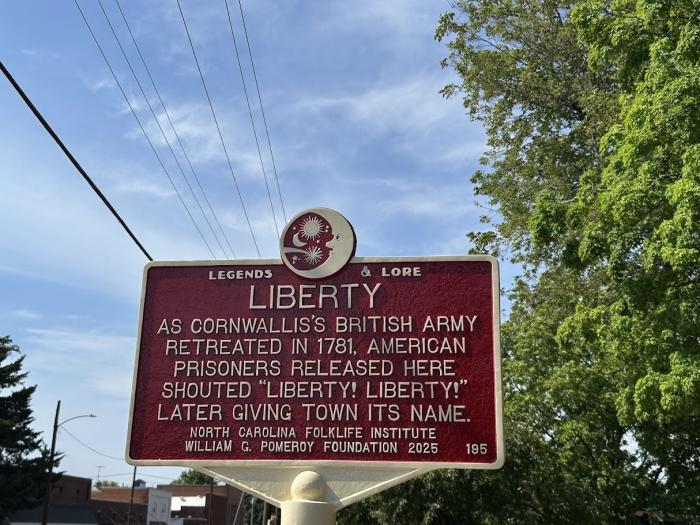
Photo Credit: Adele Lassiter
Revolutionary Grind in Liberty
Every America 250 road tripper needs fuel for the journey. Don’t miss Liberty Grounds, a wonderful local coffee shop known for its delicious lattes, homemade syrups, smoothies, and wine selection. Check out their social media pages before you visit to catch upcoming community events like live music, book clubs, and paint-and-sip nights.
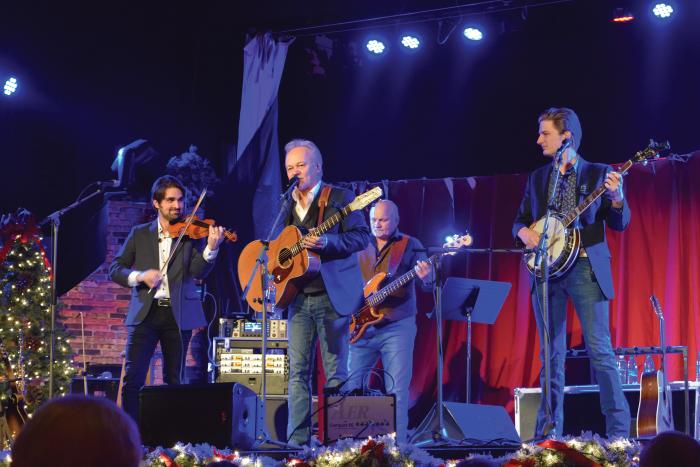
After grabbing a drink, take some time to explore the cool local shops lining Liberty’s charming downtown. Music and movie lovers will especially enjoy an evening at the Liberty Showcase Theater. This historic venue dates to 1949 and features classic films alongside world-class live entertainment from bluegrass and country royalty, ranging from Del McCoury to Vince Gill.
Stepping through the Standing Stones: Outlander in Randolph
Outlander fans will be familiar with North Carolina’s Regulator War, where beginning in the mid-1760s, backcountry farmers attempted to peacefully petition Royal Governor Tryon and the North Carolina Legislature against corrupt officials beginning in the mid-1760s. Men like the notorious Edmund Fanning held multiple positions of power that they used to cheat hardworking farmers.
A large population of Regulators lived in the area around Liberty along Sandy Creek. They worshipped at the Sandy Creek Baptist Association under the powerful voice of Reverend Shubal Stearns, who supported the Regulators' cause. After the Regulators were defeated in the Battle of Alamance (only about thirty minutes north of Liberty in Alamance County) on May 16, 1771, many locals from the Sandy Creek area fled the region in fear. Historical records estimated the Sandy Creek Association church’s membership dwindled from 600 to only fourteen after the Battle of Alamance. Today, Sandy Creek Baptist Church remains a vibrant congregation where you can visit the cemetery to see the graves of Shubal Stearns alongside local Regulators and Patriots. This is a piece of hidden North Carolina history that served as the primary plotline in Diana Gabaldon’s Outlander – The Fiery Cross and The Drums of Autumn; the Regulator War is one of the major plotlines in seasons 4 and 5 of the hit show.
Taking a "Leap of Faith" in Franklinville
In the quaint community of Franklinville, along the Deep River State Trail, you can hike through history to one of the county’s most dramatic sagas of Revolutionary War—Faith Rock. We’re talking about an intrigue that is worthy of an HBO special!
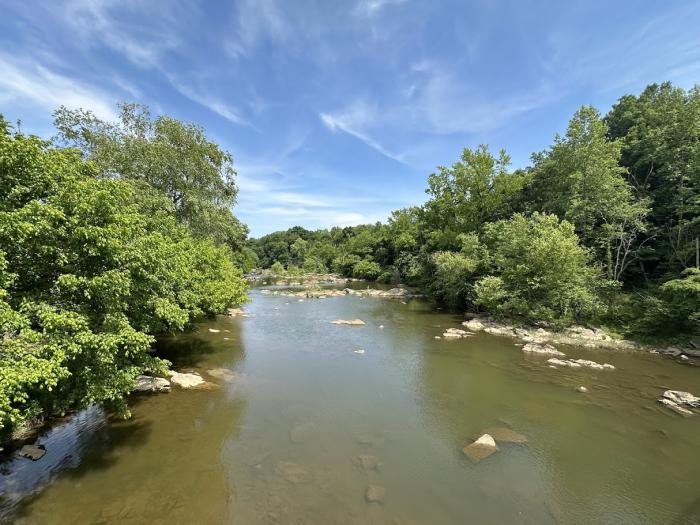
Photo Credit: Adele Lassiter
The drama began in May of 1782 when local Patriot Andrew Hunter was taking a wagon of produce to trade for salt. En route, he crossed paths with notorious Loyalist David Fanning. After Cornwallis left the Carolinas for Yorktown, Fanning had become a leader of a Tory Gang. In August 1781, Fanning and his gang had famously attacked Hillsborough and kidnapped Governor Thomas Burke. Even after the British surrender at Yorktown on October 19, 1781, Fanning continued to terrorize North Carolina Patriots, operating at times from his base at Cox Mill, near Ramseur in Randolph County.
Fanning captured Hunter and threatened his life, but thankfully Hunter managed a daring escape by stealing Fanning’s beloved horse, Bay Doe (Red Doe in some sources).
According to Fanning’s own diary, Hunter "sprung upon my riding mare and went off with my saddle, holsters, pistols and all my papers…we fired two guns at him; he received two balls through his body, but it did not prevent him from sitting the saddle and make his escape." (David Fanning, The Narrative of Colonel David Fanning, Spartanburg: The Reprint Company, 1973, pp. 59-62).
Enraged by the loss of his prized horse, Fanning headed straight to Hunter’s home, holding Hunter’s pregnant wife hostage while demanding Bay Doe's return. Fanning begrudgingly released her only when he received orders from superiors to return to Charleston, which was still under British occupation as the formal peace treaty was negotiated in Paris.
Determined to recover his horse and torment Hunter, legend holds that Fanning returned to Randolph County on September 5, 1782. The two adversaries finally squared off at Faith Rock, a massive 30-foot bluestone outcropping overlooking the rushing Deep River below. Realizing he was cornered, Hunter reportedly forced the horse to leap off the cliff into the river below, miraculously surviving and escaping.
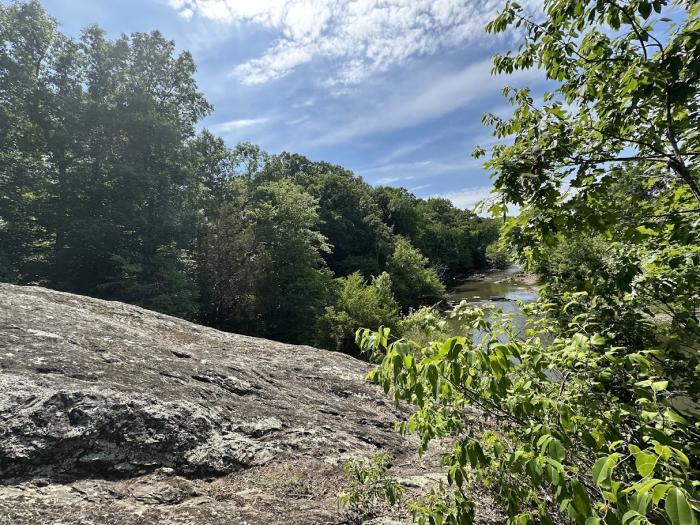
Photo Credit: Adele Lassiter
Local lore claims you can still see Bay Doe’s hoofprint embedded in the rock today. You can relive the drama of the past by hiking the 0.7-mile trail to Faith Rock. After parking in the Riverside Park lot in Franklinville, cross the pedestrian footbridge over the water before turning right to start your hike. The path is steep in places as it winds through breathtaking forests with views of the mighty Deep River. Along the way, you can learn about the local ecosystem, including efforts to preserve this important waterway and protect rare, endangered species like the Cape Fear Shiner minnow that call the river home. Looking across to the opposite shore, you’ll also notice the remnants of the old mill buildings that once were part of the historic mills that built the town of Franklinville beginning in the 1840s.
Pro-Tip
While exploring Franklinville’s Revolutionary History, don’t miss a chance to eat at one of the best diners in North Carolina. Since the 1950s, the Franklinville Diner has been serving delicious eats from hearty breakfasts including their gravy and award-winning griddle pound cake to melt in your mouth burgers and delicious pies. A must stop while in Randolph County
.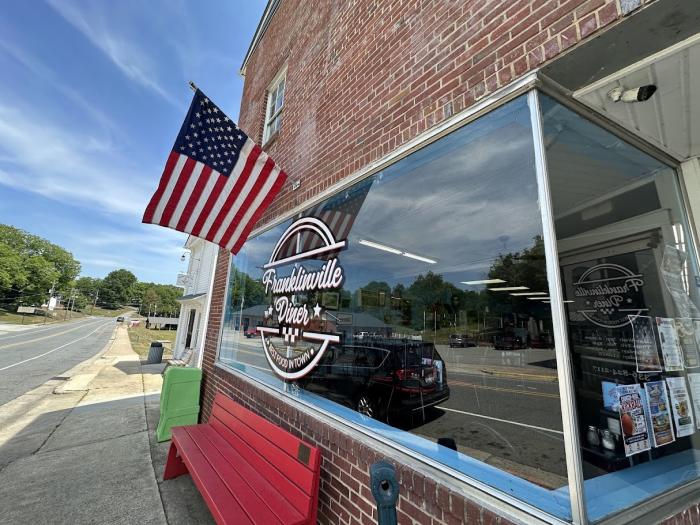
Photo Credit: Adele Lassiter
Buried History
Randolph County is the final resting place for many patriots. Notably you can pay your respects at the Andrew Balfour cemetery.
Balfour was a leader of the Patriot movement in Randolph County and served in the Continental Army. Tragically, Balfour was killed in his home on March 10, 1782, by none other than David Fanning who had unleashed his fury against patriots in Randolph County in March 1782. A chilling reminder of the struggle for Liberty in Randolph County.
Randolph Heroine of the Revolutionary War is Martha McGee Bell, who is buried near Randleman. After the Battle of Guilford Courthouse, Cornwallis camped at the Bells Mill on the Deep River for two days, needing to grind corn for his troops to rest and treat the wounded. Martha was an ardent patriot, but treated them to hospitality in exchange for her property not be damaged. When American General “Lighthorse” Harry Lee arrived at the mill shortly after the British departed, he encouraged Bell to visit Cornwallis at his next camp on a ruse related to property damage. Bell acted as a spy for the patriots, noting details as to Cornwallis’ troops and supplies.
A monument on the grounds of Guilford Courthouse National Military Park honors Bell.
For a list of patriots buried in Randolph County visit here
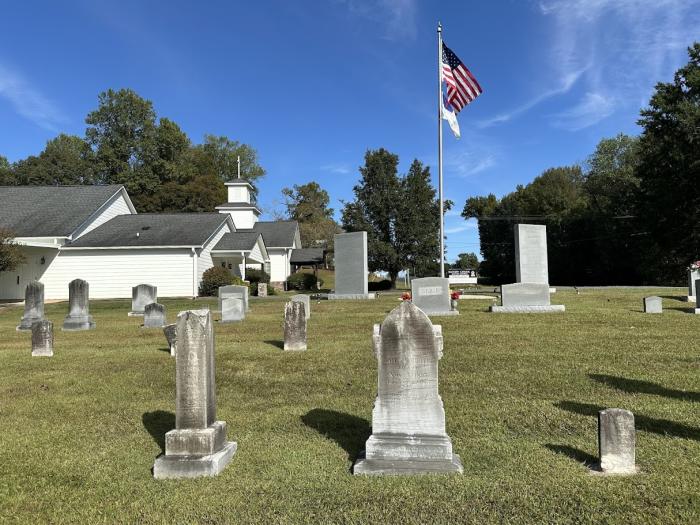
Photo Credit: Adele Lassiter of Sandy Creek graveyard
Travel the Pottery Highway through Seagrove: America’s Pottery Capital
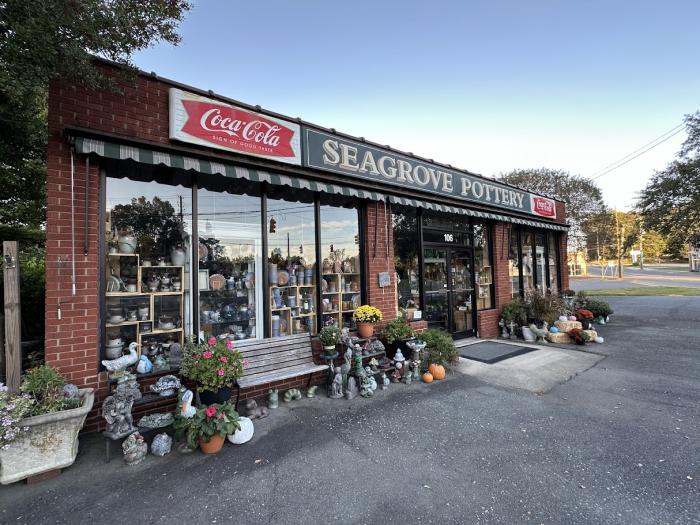
Photo Credit: Adele Lassiter
No Revolutionary Randolph adventure is complete without "spinning your wheels" down to Seagrove and the Pottery Highway (NC 705). The Seagrove area is home to the largest concentration of pottery studios in the United States, boasting over 100 potters and 55 studios within a twenty-mile radius.
For thousands of years, humans have created pottery for daily use, decorative arts, and as a hub of community. North Carolina’s abundance of diverse natural clay deposits, especially in Randolph County, has led to a rich tradition of ceramic arts. From ancient Native Americans to early settlers of English and German descent arriving in the mid-1700s, this regional abundance transformed the area into a premier center of hand-crafted pottery.
American Made
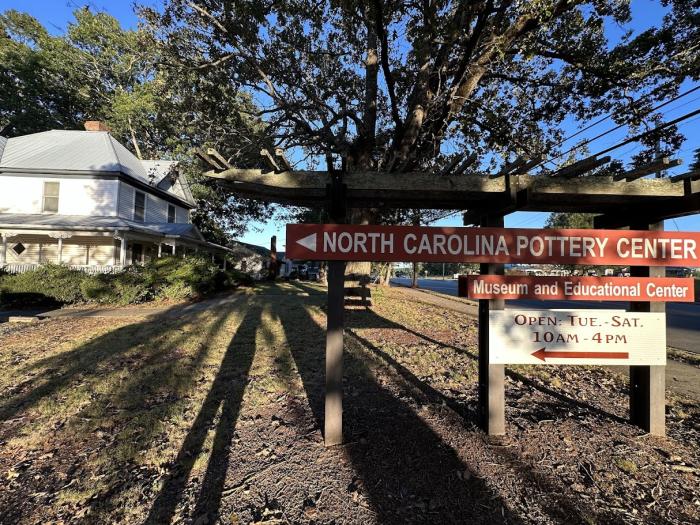
Photo Credit: Adele Lassiter
Lindsey Lambert, director of the North Carolina Pottery Center, shares that while Seagrove has been firing up kilns for generations, there was a major resurgence of interest in the craft during the 1976 Bicentennial when the government placed a special emphasis on American folk-art traditions. As we celebrate America 250 in 2026, this legacy of pottery continues to inspire tourists from all around the world to visit the region. Each potter and studio possesses a unique style and lineage, while remaining deeply connected to the greater artistic community. Some local families have been throwing clay here for nine generations or more, while other resident artists are discovering the joy of the craft for the very first time.
At the North Carolina Pottery Center, you can explore the comprehensive history of pottery across the state and tour rotating exhibitions of fine ceramic arts. Because there are so many talented makers in the area, starting your journey at the center allows you to "preview" works by each local artisan and craft the perfect customized itinerary along the Pottery Highway.
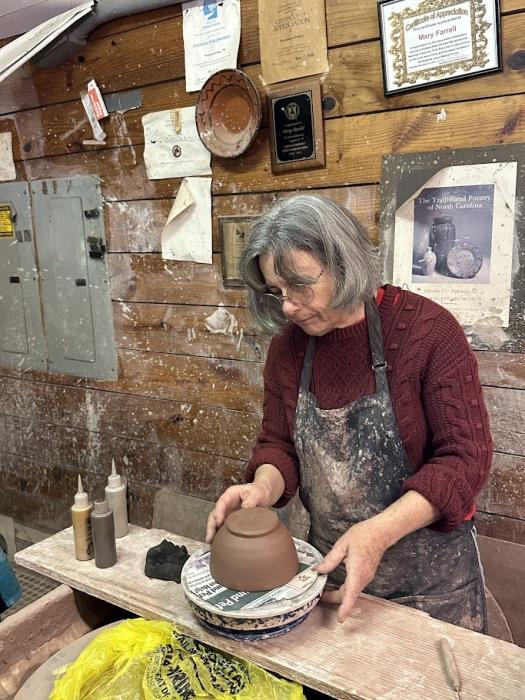
Photo of Potter Mary Farrell of Westmore Pottery Photo Credit: Adele Lassiter
In celebrating America 250, one potter who truly stands out is Mary Farrell of Westmoore Pottery. Mary founded Westmoore Pottery with her husband, David, in 1977. Both had been fascinated by clay since childhood and originally met while apprenticing in nearby Jugtown. Over the decades, Mary has become a foremost expert in 17th-, 18th-, and early 19th-century pottery styles. Her historically accurate pieces have been featured in over 100 museums, including Colonial Williamsburg, and her period-correct work can be seen onscreen in major productions like The Patriot and the John Adams miniseries. Her studio and shop are open every day except Sundays and Wednesdays. What better way to celebrate America’s circa-1776 history than by learning about the actual wares used during the Revolutionary era—and treating yourself to a Westmoore original?
For more about Westmoore Pottery click here
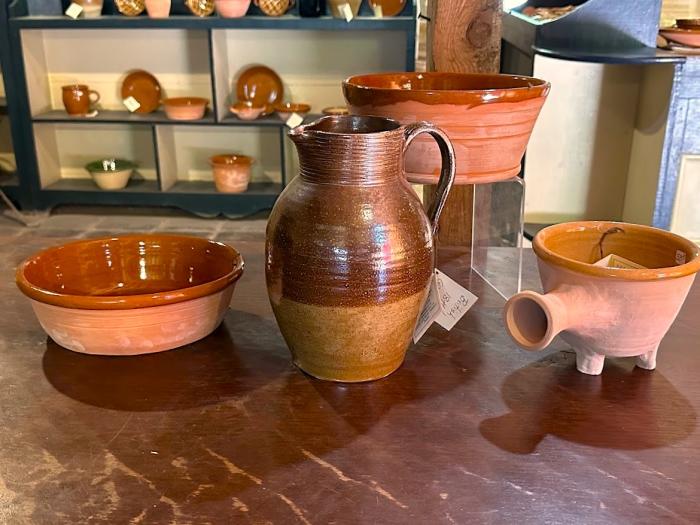
Photo Credit: Adele Lassiter
Discover the Howl of Liberty at the North Carolina Zoo:
Did you know the North Carolina Zoo is on the forefront of helping to save the world’s most endangered canid—the American Red Wolf? During the Revolutionary War, Red Wolves roamed throughout the southeastern United States. Patriots, Loyalists, farmers… would have been familiar with the howl of the red wolf in this region. The Red Wolf is unique in that it is a purely American wolf in its DNA. These magnificent creatures were important natural predators in the ecosystem, but due to fear and lack of understanding of their importance in the fabric of the landscape, sadly the Red Wolves of North Carolina were hunted nearly to extinction.
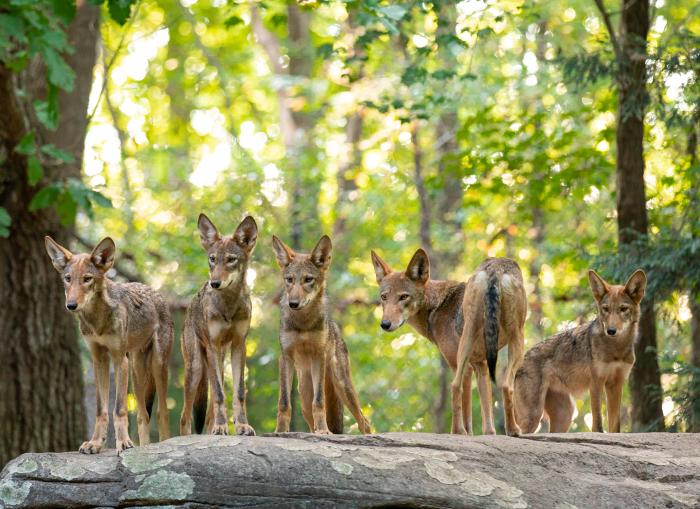
Photo Credit: North Carolina Zoo
Thankfully, due to conservation efforts beginning in the 1970s, the race to save the Red Wolf began. In September 1987, a team of U.S. Fish and Wildlife professionals began the process of reintroducing the red wolf into the wild in an area around Alligator River National Wildlife Refuge in northeastern North Carolina. Today there are an estimated 20–30 red wolves in the wild. The biggest threat to the wolf is being hit by cars along Highway 64. Efforts are being made to install wildlife bridges in the region to help wolves cross this busy highway more safely.
When you visit the North Carolina Zoo, you can ‘meet’ the amazing Red Wolf in their cozy natural habitat. These ambassador wolves, like Thor, are not eligible for reintroduction into the wild due to injury or age, so they help to educate visitors about red wolves. On select days, guests can even attend specialized zookeeper chats to learn firsthand about wolf behaviors and ongoing recovery efforts.
Photo Credit: Adele Lassiter
But the real magic happens behind the scenes. The North Carolina Zoo is home to the second-largest red wolf breeding facility in the United States. The zoo works hand-in-hand with the USFWS to preserve genetic diversity and ensure the zoo-born pups can be successfully reintroduced into protected coastal lands where their ancestors ran wild for thousands of years before overhunting and habitat destruction decimated their populations. The Zoo hopes to expand its American Red Wolf breeding program with the help of community members.
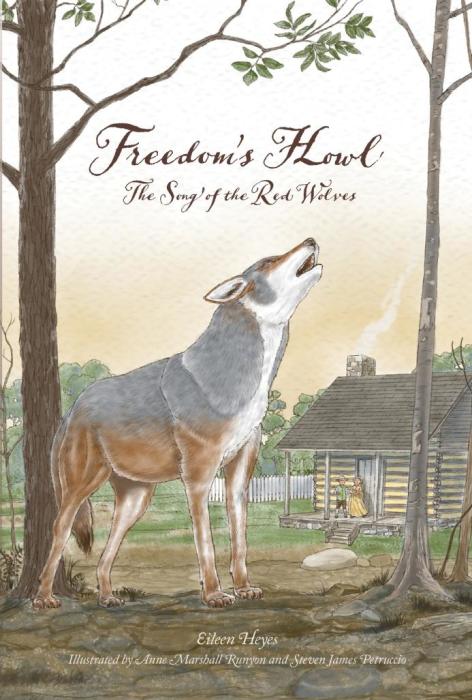
To celebrate America 250 and raise awareness for Red Wolves, the North Carolina Department of Natural and Cultural Resources released a wonderful children’s book, Freedom’s Howl - The Song of the Red Wolves, authored by Eileen Heyes. It tells the story of the Few family, who lived in the Eno River Valley near modern-day Hillsborough in 1776 and their lives alongside a family of Red Wolves in the middle of the fight for Liberty. The story is filled with facts about Red Wolves and efforts being made to bring back these extraordinary creatures from the brink.
Want to help save the Red Wolves – your ticket to the zoo helps support conservation efforts. You can also ‘adopt’ a red wolf, where you get a copy of ‘Freedom’s Howl,’ adoption certificate, stuffed animal and other Red Wolf goodies. The donation helps support the Red Wolf. Learn more here
Road to 250: Randolph County is Revolutionary
From Historic Sites like Faith Rock to Legacy of America’s Pottery Tradition in Seagrove to the Howl of Freedom at the North Carolina Zoo, Randolph County is your destination for a fun America 250 adventure!